Why Regular Maintenance Matters
Living in Plant City means dealing with hot, humid weather that puts serious strain on your cooling system. When temperatures climb and your AC runs nearly nonstop from April through October, small issues can quickly turn into big problems. That’s why understanding basic upkeep can save you hundreds of dollars in emergency repairs and help your system last years longer.
Many homeowners wait until something breaks before thinking about their heating and cooling equipment. But just like changing your car’s oil prevents engine damage, simple routine care keeps your system running efficiently. The good news? You don’t need special tools or technical training to handle the most important tasks yourself.
We’ve seen countless systems fail prematurely because filters went unchanged or outdoor units became choked with debris. These preventable breakdowns leave families sweating in the Florida heat while waiting for repairs. By spending just a few minutes each month on basic upkeep, you can avoid most common failures and keep your home comfortable year-round.
Replace Your Air Filter Monthly
Your air filter is the hardest-working component in your entire system. In Plant City’s dusty, pollen-heavy environment, filters clog fast. A dirty filter forces your system to work harder, driving up energy bills and shortening equipment life. During peak cooling season, we recommend checking your filter every three to four weeks.
Finding your filter is usually straightforward. Most systems have them either in a slot near the air handler inside your home or in the return air grille on your wall or ceiling. If you’re not sure where yours is located, check your owner’s manual or look for a rectangular panel that opens easily.
When you pull out the old filter, hold it up to the light. If you can’t see through it clearly, it’s time for a replacement. Don’t try to clean disposable filters by shaking or vacuuming them. This rarely works well and you’ll end up with reduced airflow anyway. Stock up on the correct size so you always have replacements ready.
Installation takes less than a minute. Just slide the new filter into place, making sure the arrows on the frame point toward the air handler (the direction of airflow). This simple task dramatically improves indoor air quality while protecting your equipment from dust buildup that can cause serious damage over time.
Keep Your Outdoor Unit Clear
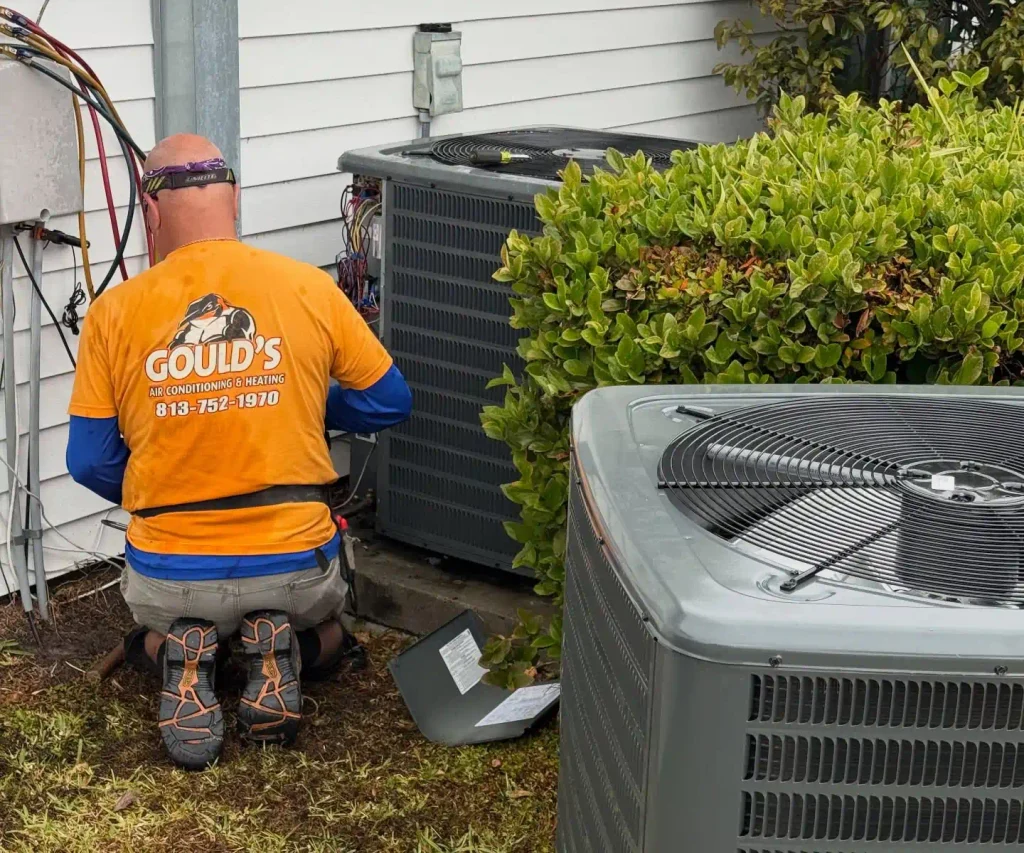
The condensing unit outside your home needs room to breathe. This box-shaped component releases heat from your home into the outdoor air, but it can’t do its job properly when surrounded by plants, leaves, or debris. Take a walk around your outdoor unit once a month to check for obstructions.
Clear away any grass clippings, leaves, or branches within two feet of the unit. If you have shrubs or plants nearby, trim them back to maintain proper clearance. We’ve responded to service calls in Brandon and Tampa where overgrown landscaping cut airflow so severely that systems overheated and shut down completely.
While you’re inspecting the area, look at the metal fins on the sides of the unit. These thin aluminum pieces bend easily, and bent fins restrict airflow. If you notice bent sections, you can carefully straighten them with a butter knife or purchase an inexpensive fin comb from a hardware store. Work gently to avoid damaging the fins further.
A few times per year, especially after storms or high winds, spray down the outside of the unit with a garden hose to remove accumulated dirt and pollen. Turn off power to the unit first at the disconnect box nearby. Spray from the inside out to push debris away from the fins rather than deeper into the unit.
Monitor and Clear Drain Lines
Your air conditioning system removes gallons of moisture from your home’s air every day. This water collects in a drain pan and flows out through a condensate drain line. When this line clogs with algae or mold, water backs up and can damage your home or trigger a safety shutoff.
Locate your drain line by finding the PVC pipe coming out of your indoor air handler. It usually runs to a floor drain, outside wall, or plumbing cleanout. You’ll typically see a small vent pipe sticking up near the air handler as well. Every month or two, pour a cup of white vinegar or a specialized drain line treatment down this vent to kill algae and prevent clogs.
Check where the drain line exits to make sure water flows freely when your system runs. If you notice water pooling around your air handler or dripping from the unit, you likely have a clog that needs attention. Many clogs can be cleared by using a wet-dry vacuum on the outdoor end of the drain line to suck out the blockage.
During Florida’s humid summer months, drain line issues become especially common. We respond to water damage calls regularly in Lakeland and Riverview where clogged drains went unnoticed for too long. Catching these issues early prevents expensive water damage to ceilings, walls, and flooring.
Test Your Thermostat and Check Refrigerant Lines
Your thermostat controls when and how long your system runs, making it critical for both comfort and efficiency. Test it seasonally by switching between heating and cooling modes to confirm both work properly. If you have a programmable or smart thermostat, verify that your schedule settings still match your daily routine.
Replace thermostat batteries once a year, typically when you change your smoke detector batteries. A dying battery can cause erratic system behavior or complete failure to start. If your thermostat display looks dim or shows a low battery warning, swap in fresh batteries immediately.
Check the temperature accuracy by placing a separate thermometer near your thermostat. If readings differ by more than a few degrees, your thermostat may need recalibration or replacement. Thermostats in direct sunlight, near drafty doors, or above heat sources give false readings that make your system work harder than necessary.
Finally, inspect the refrigerant lines running from your outdoor unit to the inside equipment. These insulated copper pipes should have intact foam insulation with no tears, gaps, or missing sections. Damaged insulation reduces efficiency and causes condensation problems. If you notice ice forming on these lines during operation, turn off your system and call for service, as this indicates a serious issue requiring professional attention.
Since 1998, we’ve helped thousands of Plant City homeowners keep their cooling systems running smoothly. While these maintenance steps handle the basics, some tasks require specialized tools and training. Our licensed, bonded, and insured technicians can handle everything from routine tune-ups to full system evaluations, and we reach customers the same day more than 99% of the time. When you need more than basic upkeep, we’re here with upfront pricing and no hidden surprises. We even register new equipment warranties for you, so you get the full protection you deserve without the paperwork hassle.